


LXP or LMS?
CEO, Kontis s.r.o.
4 minutes read


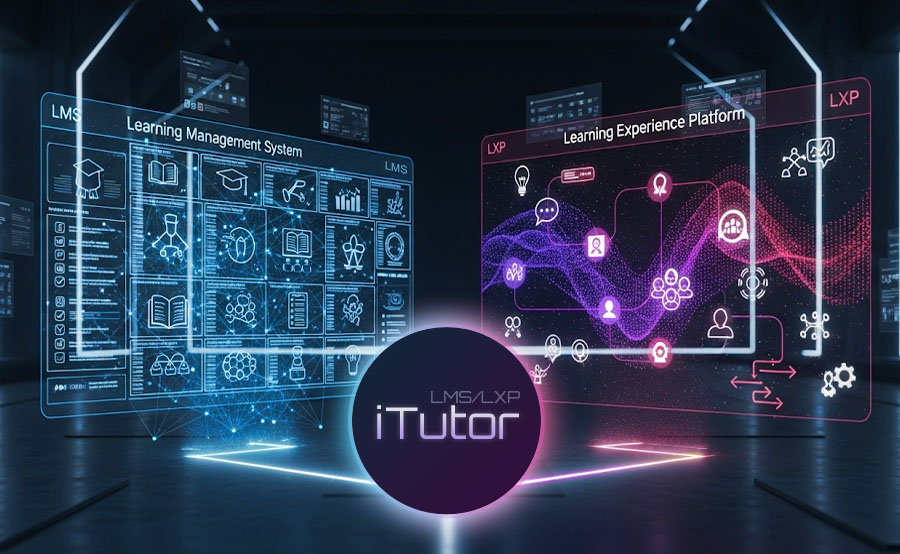
Summary: What is LXP - Learning eXperience Platform, what are the basic features of an LXP, and how are they practically implemented? How does an LXP differ from an LMS – Learning Management System, and do these acronyms represent two different platforms?
LMS
The term LMS, Learning Management System, originated at the end of the last century. Since then, it has been used for systems designed for corporate and school education management. LMS handles user management (students), online and classroom courses, assigning courses to students, and monitoring their study results. LMS usually includes many additional functions such as student testing, reporting, analysis, automation, certifications, notifications, etc.
LXP
The term LXP, Learning Experience Platform, is more recent, emerging around 2017. The English name is typically used because the literal translation into Czech/Slovak is somewhat awkward. These platforms focus on personalized learning tailored to individual student needs, learner-driven engagement, peer-to-peer learning, active participation, and content creation.
Adopt LMS or LXP?
In our opinion, this is the wrong question. If you have to make this choice when implementing a system for training employees, partners, or students, then choosing one over the other is probably not the best decision.
Based on current definitions:
- LMS focuses on the centralized administration of training, usually managed by the HR department. Training in LMS follows a structured process that ensures employees complete the right courses at the right time (e.g., when joining a department or when a certification expires). This is common for compliance, regulations, rules, and mandatory certifications.
- LXP, on the other hand, offers a personalized, user-driven learning process. It allows employees to control their own learning path, study at the point of need, aggregates content from multiple sources, recommends materials based on interests, role and activities, and enables content creation and collaborative learning.
The reality is you need a solution that does both. Splitting the definition into LMS vs LXP is more of a marketing distinction introduced when new LMS vendors wanted to differentiate themselves. Each approach supports different training needs, and in corporate environments, both are required to meet HR objectives. While traditional LMS started mainly as centralized systems, modern LMS vendors (Docebo, 360Learning, TalentLMS, etc.) have gradually integrated LXP features. At Kontis, it has been our long-term goal to set trends in education and HR technology. The iTutor LMS core has been in development for over 20 years, and during this time, we have implemented all generally recognized LXP features—mostly even before the term LXP even existed. The next chapter explains these features and their real-world implementation.
Key Features of LXP
Learning “at the moment of need”
An LXP supports initiative and motivation for learning in real time, not according to a predefined plan. State-of-the-art LXPs leverage AI for this purpose.
iTutor supports Just-In-Time (JIT) learning — studying exactly when needed, closely tied to micro-learning. Before AI, it was harder to instantly find the exact resource a learner needed. With iTutor AI, employees can use natural language to ask, and the system will find the right courses, guides, documents, or procedures. The AI module summarizes results into a concise learning block with links to detailed content. If the summary is not enough, learners can launch the linked courses or documents. JIT/micro-learning powered by AI is explained in detail in this article.
Gamification for engagement
LXPs motivate learning by including gamification elements such as points, badges, leaderboards, challenges, and missions. These make learning more engaging and drive better performance by encouraging completion and peer competition.
iTutor supports customizable badges, team competitions, and credits for completed courses. Complex rules can be set (e.g., time spent, test scores, comparison with peers, fastest completion, etc.). Leaderboards allow individuals or teams to compare results. All gamification features are clearly available in the “My Achievements” app with badge boards, rankings, etc.
User-generated content
Traditionally, LMS content was created by experts in specialized authoring tools—producing high-quality but expensive and slow-to-develop courses. LXPs allow anyone, including learners, to contribute content, aggregate resources from multiple sources, and add comments and ratings.
iTutor supports two content approaches:
- Course development via LCMS (Learning Content Management System). iTutor includes an integrated LCMS, enabling almost anyone to author courses using an intuitive web-based interface with drag-and-drop elements for text, images, multimedia, and quizzes. Courses can also be imported from PowerPoint and enhanced with interactivity. Content is stored as SCO objects (SCORM standard), allowing the reuse of other authors’ content.
- Broader educational document management via DMS (Document Management System). iTutor consolidates educational files (documents, presentations, videos, spreadsheets, etc.) from across the company into a single secure repository, with version control, access rights, approvals, and workflows. These documents can be integrated into courses, and iTutor ensures learners retake courses if linked documents change.
iTutor also supports content evaluation. Students are notified to rate courses immediately after completion, while managers provide input later to assess workplace impact. Future learners can thus view both student satisfaction and managerial assessment before deciding to enroll.
AI Chatbots for learner support
Advanced LXPs include AI-based chatbots that interact with learners to guide them, making learning more accessible and personalized.
iTutor allows AI chatbots to be deployed not just within the platform but also on intranet or external sites. These chatbots go beyond learner support—they can complete certain tasks independently, reducing workload in service, support, or sales. More details and demos are in this article.
Social learning, personalization and collaboration
LXPs foster communities and peer interaction, offering discussion forums, comments, and user profiles. Profiles contain personal information and work roles, which are used to recommend relevant content and design learning paths.
iTutor supports forums linked to groups or courses, personal messaging, and search across communication. Integration with MS Teams for classes is available. Employees can update profiles, join groups mapped to job roles, and automatically receive relevant training paths. The “Qualifications in Organization” app helps staff see roles they aspire to and the courses required to achieve them.
Analytics
LXPs include advanced analytics on learning progress, content usage, and skills development. This helps users understand their performance, time investments, strengths and weaknesses.
iTutor stores detailed data at the learning object (SCO) level (SCORM standard) and offers a wide range of reports. With iTutor Reporter, administrators can create custom analytics using SQL and XSLT for graphs, comparisons, and interactive dashboards, visible to both learners and managers.
Importantly, iTutor analytics go beyond study data. The true business goal is not just training but improved work outcomes. iTutor includes talent management modules (competency reviews, 360 feedback) and performance management (goal-setting with MBO, tracking, linking to rewards). This ensures visible links between education, competency growth, and professional success—fully aligning with adult learning theory.
Other Features
Many sources cite additional LXP features such as mobile support or integration with other systems. We consider these standard for any quality professional education system and therefore don’t emphasize them as differentiating characteristics.